Undergraduate Study
Experiential Learning
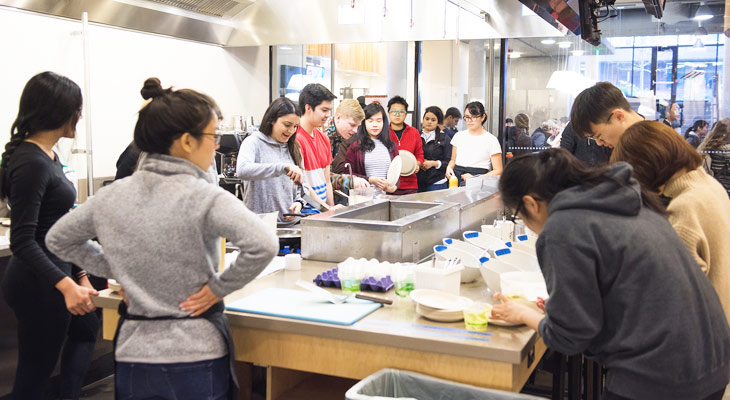
Experiential learning is central to the Food Systems, Nutrition, and Health (FSNH) major. In both the Bachelor of Arts (BA) and Bachelor of Science (BS) degrees, students apply classroom learning to real-world challenges through internships, research, community partnerships, a community-engaged capstone, service learning, and study abroad. This integrated work prepares FSNH students to make informed decisions about their futures and contribute meaningfully to more equitable and sustainable food and health systems.
Coursework
Experiential learning is embedded across the FSNH curriculum. Throughout their time in the major, students will have the opportunity to learn about and experience various community settings, including sites where food is grown, processed, and distributed, and use knowledge gained in coursework to address real-world challenges and opportunities. One cornerstone of this philosophy is the Food Systems Capstone (NUTR 493). In this culminating experience, senior FSNH students work in teams with community partners to address complex, real-world food systems issues. Community partners often represent local to state government agencies or non-governmental and community-based organizations (NGOs and CBOs). With support from their instructor and guidance from their community partners, students use systems thinking and an equity-centered, community-engaged approach to develop projects or resources that respond to community-identified needs. Examples of past capstone projects can be found on our Student Projects page.
Internships
Students in FSNH who have an internship in the field are able to earn credit for their work by taking NUTR 495. This independently motivated opportunity connects them with a faculty member who can serve as a touchpoint throughout their work and help them apply the knowledge they gained from the experience to shape and refine their future goals. Students need to secure their own internships before signing up for NUTR 495. Current students who are interested in registering for internship credit can find more information on the Undergraduate Student Resources page.
Study Abroad
FSNH regularly offers study abroad opportunities, recently to countries including Ireland, Italy, and Morocco. These experiences give students the opportunity to connect with local experts and scholars to discuss how history, policy, and food culture affect food systems and the important role food is playing in embracing a more sustainable future. Want to go elsewhere? We also work closely with UW Study Abroad to support students attending programs across the world.
Research
Engaging in research allows undergraduate students to contribute unique perspectives, sharpen critical and analytical skills, complement and extend classroom learning, and prepare for graduate and professional study. FSNH students can earn research credit by enrolling in NUTR 499. Current students who are interested in registering for research credit can find more information on the Undergraduate Student Resources page.